Saturday, July 07, 2007

Would You Willingly Lock Yourself In a Room For Fifteen Years for $2 Million?

Anton Chekhov tells a story (The Bet) of a banker and a lawyer. The two made a bet. The banker bet $2 million that the lawyer couldn't stay 15 years inside a cell. The lawyer wagered his freedom.

This was self-imposed imprisonment which hinged solely on the lawyer's word. The banker reasoned that being forced was different from willing submission. The idea that he could free himself at anytime but being constrained by the conditions of the bet would be enough to drive the lawyer crazy and quit.

In a sense, $2 million dollars would be as nothing to the rich banker. The bet was simply a whim of a well-fed man. On the part of the lawyer, it was more of greed.

The conditions were stringent. The lawyer was not allowed to step out the door. He could not see people, hear human voices, or received letters and read newspapers.

However, he was allowed to have a musical instrument, read books, write letters, drink wine, and smoke tobacco. He could communicate only via notes passed through a small window built for the purpose. If he escaped even if only for a fraction before the time, the banker would be freed from his obligation to pay.

Over the years, the banker almost lost all of his wealth. His greatest fear was that he would be broke after he gave away the two million, and the lawyer would ridicule him. The self-confident banker has become a mere shadow of his former self.

For his part, the lawyer became a cynic. He abhorred the things of the world. His readings enabled him to master many languages, the classics, and literature written by well-known authors. History and the sciences. And yet, he despised even the books that gave him his knowledge. He had assumed a superior attitude, and he scorned all that the world has become, the good along with the bad. His knowledge had corrupted him. He was also physically frail and his body became a mere wisp of what he used to be. Old before his time.

But, what was very significant about his life inside the cell was how his readings fired up his imagination. He went places, climbed mountains, and made love to beautiful women. But, it was also his imagination that altered his thinking.

Ordinary men would think that his confinement had made him lost his mind. But, the lawyer gave up his right to the $2 million! It was the crowning glory of his disavowal of all things worldly. He made the decision to leave his cell 5 minutes before the time to free the banker from the conditions of the bet.

It would appear that both men were losers in this bet. But, the banker has learned a lesson in humility. There are things that money can't buy. As for the lawyer, you can never sell your freedom for anything. While the mind maybe free, the host in which it resides would still feel the physical shackles of confinement. The mind will eventually fail as the physical host fails.

Tuesday, July 03, 2007

Travel as an Insider

How would you like to go on vacation, write it off as an expense, and then get paid to do it? Sounds impossible? You can do this if:

1) you are a travel agent, and
2) you have a travel business/agency

Let me explain. As a travel agent, it is your business to go to vacation spots to check them out. For example, how does the service measure up? What kind of facilities do they have? What makes each one of them unique? What are the add-ons to the basic? Perhaps, most important of all, what compelling reason would make you go there in the first place? In other words, as a travel agent, it is your business to know your product. If you don't know anything about the places you are sending your customers to, you have no business being in the travel business.

Now, since your travel is business or work-related, as opposed to leisure, it can be considered an operating expense. But, while you are "at work", say in Hawaii, you should take some effort to fill out some kind of survey of all the hotels and resorts you visited, and/or make a report of everything that you have observed. Make a journal if you have to. Why? The IRS might ask for it.

So, how are you going to get paid for doing this?

You have a business, right? What if you do business on the internet like Expedia, or Orbitz? You know what Expedia and Orbitz do? They refer travelers to hotels, cruise lines, resorts, airlines. These travelers will make their purchases through their website. Since the purchase was made through their website, they get a commission. And they make millions. Since, it is your job to travel, you can book your own travel in your own website. Right? So, you get a commission from your own travel. This is what you call paycation.

How much is a travel website? Expedia was bought for $5.1 billion. If you hire a webmaster to make one for you, it might cost you thousands. But, what if you can get one for under $500.00. An operational website with a search engine, that provides access to airlines, cruise lines, hotels, and resorts, car rentals, and all other facilities that makes travel easy and fun wouldn't you just grab the opportunity to own one? Of course you would!

Here's the bonus. Do you know how much it cost to maintain a travel office downtown? Thousands of dollars. But, this travel website will be maintained for you for just under $50.00. It has a back-office where you can track your commissions, an automated marketing system that takes care of advertising and selling for you. All you do is provide names and e-mail addresses of friends, family members, and contacts. You do not need office staff.

It's about time time to own your travel website. Be a Referring Travel Agent, like Expedia, or Orbitz. Now is the time, or the world will pass you by.

Sunday, June 24, 2007

Flavier's Parable of the White Jar

Once upon a time there was a young beautiful white jar. She was so fragile and delicate her mother over protected her. She lived a sheltered life. She has to follow a lot of rules that her mother imposed on her. Her mother told her, these rules came from the creator. But, of all the rules, the most significant are:


a) don't go swimming in the sea,
b) stay away from brown jars

One day while she was occupied with making herself shiny and more beautiful, the white jar saw something she had not seen before in her life. It was a brown jar solidly made and strong. Suddenly, she felt something inside of her that she never felt before.

The brown jar went up to her and began talking in a soft masculine voice that captivated her. That was the beginning of a relationship between the white jar and the brown jar.

Everyday, the brown jar would come to visit and tell the white jar of the world she had never seen, of places she could only dream of.

Then, one day the brown jar invited her to go swimming in the sea. Forgetting her mother's advise she went with the brown jar.

It was fun swimming! She never had that much fun in her life before. Then, the wind began to pick up and the waves started to swell. As much as she tried to keep her balance she could not. A particularly strong wave washed over both of the jars and the white jar was pushed violently against her brown companion. As she shattered into a hundred fragments a thought entered the white jar's mind in a flash.

"Stay away from brown jars."

Moral: When the wise one tells you something, there's always a reason for it.

Friday, June 15, 2007

The Golden Age of Travel

Billions for Intangibles

In 2003, Expedia was bought for $5.1 billion. The following year, Hotwire and Cheap Tickets was bought for $2.1 billion, and a year after Orbitz was purchased for $1.2 billion. What are these companies? Are they selling some kind of wonder drug? Or, maybe some kind of lubricant that will make old engines run like new? No. These companies sell travel. But, they're not like your friendly neighborhood travel agency with an office down the street. These are virtual travel agencies. Their business sites are on the Internet.

The New Kid on the Block

Right now, there is one Internet travel agency that's giving Expedia, Hotwire, and Orbitz a run for their money. It's YTB (Your Travel Biz) International. It was founded in 2001, but it began operations only in 2003. It has a unique formula. Instead of operating just one travel website like its competitors, it sells them to Referring Travel Agents who will operate separate internet travel agencies under the YTB umbrella. But, RTAs won't pay billions. Not even thousands.

Starting with just 3 when it began operations, YTB has now over 100,000 RTAs. The strength of this formula lies in the fact that YTB does not spend money on advertising. It relies on the word-of-mouth of the RTAs. The RTAs will simply refer their relatives, friends, acquaintances, and people they meet to their sites. One hundred thousand RTAs is a formidable advertising force.

Making Money the Easy Way

How do the the Internet travel agencies make money? These companies are technically Referring Travel Agencies. What they do is point travelers to their website. The website is a virtual travel mall where the traveler can:

* shop airlines, compare prices and purchase tickets (60 airlines)
* make reservations with hotels and resorts (55,000 hotels and resorts)
* rent cars
* book cruises
* send flowers
* buy tickets for special events (concerts, sports events)
* check out golf schedules
* get help with travel problems

Everything that makes travel easy and fun are inside the travel site. When travelers make a purchase through the websites, the vendors pay a commission to the website owner. Very simple, and very profitable. Those billions of dollars paid for Expedia, et al really say a lot.

The Reason Why: The Way to Go

Why would investors pay billions of dollars for intangible assets? It's all about trends. Right now travel is a $7 trillion industry world wide and is expected to double in 10 years. In the U.S. it generates $1.3 trillion annually which translates to:

* $3.4 billion a day
* $148 million an hour
* $2.4 million per minute
* $40,000.00 per second

BIG numbers. What brought this about? Remember the Baby Boom phenomenon? Those people born between 1946 and 1964, the Baby Boomers, had exercised significant influence on world economy for decades. When they were babies they made Gerber famous because of baby food. When they were toddlers they played with toys that put Mattel and Hasbro on the map. In their 20's, they drove sports cars and made the Ford Mustang the top-selling car in America. When they became parents, it was the minivan.

The Travel Avalanche

Now, these Baby Boomers are in their retirement age. They will start to retire at the rate of 1 every eight seconds, or 10,800 every day for the next 20 years. This figure is only for the U.S. World wide, there is an estimated 1 billion Baby Boomers!

This generation also inherited the wealth of the previous generation, the Savings Generation. Now, if you are a Baby Boomer with money to spend what would you do? Travel and go on vacation, that's what you'd do. After years of hard work you will reward yourself. Vacation, travel, the chance to enjoy life and have fun, these are the best rewards you could get.

Better Pack up and Run

If you own a travel agency with an office where you pay rent, salary for staff, utilities, and miscellaneous expenses you are in big trouble now. Why? Every 3 seconds someone, somewhere goes on line to shop or to buy- anything and everything. Eighty million Americans book travel on line each year. Baby Boomer households registered 268.9 million trips in 2003. The highest recorded travel volume in the United States.

Take a look at the trend in travel spending done on the Internet:

* 2002 - $30.8 billion
*2003 - $37.0 billion
*2004 - $54.0 billion
*2005 - $62.0 billion

An increase of 27% per year, average.

What are You Thinking Now?

So, if you're thinking of owning a home - based business the Internet travel agency would be a smart way to go. However, buying Travelocity might be way too expensive. It might cost you billions too. But, you can still get one from YTB International and be an RTA. Very smart move.

How do I know? I'm one. If you want to know the way, Green Crest will lead you.

Wednesday, June 13, 2007

The Lifespace (Part 3)

This is the final installment of the series on The Lifespace.

In the movie "Shawshank Redemption," I have previously discussed the experience of Brooks Hatlen (James Whitmore) and Red Redding (Morgan Freeman) in the light of the lifespace theory proposed by Kurt Lewin.

There was another character in the movie, Andy Dufresne played by Tim Robbins. Andy had a different experience. Inside prison, he never ceased to hope for freedom. To his friend Red, he said,

"Hope is a good thing. Maybe the best thing. And, no good thing ever dies."

Unlike Red and Brooks whose entire worlds ( both mind and body) were limited to the confines of the prison wall, Andy's encompassed the outside. He did not allow his mind to be imprisoned. It is this consciousness that never killed his desire to escape. Andy spent 20 years at Shawshank Prison. In those 20 years he worked on his escape. He did manage to escape.

One thing that worked in favor of Andy was that he was a professional and working as a banker when he went in. So he had his formation on the outside. In a sense, he was already "fully formed" when he got in. Red and Brooks, on the other hand, were very young when they got in and basically grew up - and grew old in prison.

It is important to draw this contrast. Andy's formation was made on the outside. His lifespace was stable. On the part of Red and Brooks, the substantial part of their formation was inside. Whatever early formation they had was later on eclipsed by the prison environment. While they were inside, things had changed dramatically on the outside. They world "passed them by," so to speak.

One more thing that worked in Andy's favor was his education. With these, he managed to keep intact his experience of the outside world with the use of his imagination. "Iron bars do not a prison make", as a poet once said. With his prior knowledge of what the world was, he knew what it was going to be.

Saturday, June 09, 2007

The Lifespace (Part 2)

The person responsible for the theory of lifespace was Kurt Lewin (1890 - c.?). He said that a field is "the totality of coexisting facts which are conceived of as mutually interdependent" (1951).

The lifespace within which the individual acts is a conglomeration of many lifespaces which create the experiences that govern his or her behavior. Experiences in the different lifespaces make up what the person is. To be able to understand the person's behavior you need to look into his/her experiences within these lifespaces. For example, family is a lifespace. So is work, school, church, the social circle within which one moves, and any other areas where a person may find himself or herself and may either influence it or be influenced by it and gaining experience thereby.

So, according to this theory, it all begins in the lifespace. It is there where principles, beliefs, ideals, theories about the world and everything that govern a person's thought processes are formed - formed as it were, by the experiences that impact his or her consciousness.

The lifespace could be limited or boundless, depending on the capacity of the person's mind to grasp the reality that surrounds it. Obviously, where the faculties are impaired, the ability to form a healthy lifespace would be likewise impaired. Where physical constraints are imposed upon a person - where the personal world had been confined within narrow limits resulting in a limited experiential formation - such a person would also have a very limited lifespace. Consequently, expanding one's consciousness expands one's lifespace.

This explains what happened to Brooks Hatlen (James Whitmore) in the movie, "Shawshank Redemption".

There was another character in the movie, Red Redding, played by Morgan Freeman. While answering questions before the parole board, Red Redding said, "To tell the truth, I don't give a shit," indicating he couldn't care less whether he got paroled or not. He got paroled.

In one instance, while working as a bag man in a grocery store, he needed to go to the bathroom. He asked permission from his boss who said, "If you need to go, just go. No need to ask." On the outside, Red was acting out life patterns formed while he was in prison. Where everything that anyone needed to do must be done with supervision.

In his narration, Red said that for so long all his actions had been under the control of somebody else: "(for) Forty years I been asking permission to piss. I can't squeeze a drop without say-so."

Outside, he cannot act on his own. The prospect of being on his own, to do things on his own, scared him.

"There is a harsh truth to face. No way I'm gonna make it on the outside. All I do anymore is think of ways to break my parole. Terrible thing to live in fear. Brooks Hatlen knew it. Knew it all too well. All I want is to be back where things make sense. Where I won't have to be afraid all the time."

Red experienced fear outside of prison. In his prison world everything was predictable. He was the wise one inside. He always knew what was going to happen next. But, the world outside was unpredictable and very threatening. (more)

Sunday, June 03, 2007

The Song In My Head . . . . . .

I've developed the habit of singing in my head, depending on the mood I'm in. When I get up in the morning, there's always a song there. My favorite song in the morning when I'm getting ready for work is, "Get Me to the Church On Time." But I've changed it to "Get Me to Work On Time".

The song now goes like this:

"I'm getting to work in the morning,
Ding, dong the alarm is gonna chime.
We'll have a whopper, pull out the stopper,
I'm getting me to work on time.

I've got to get there in the morning,
Spruced up and looking in my prime.
Pull out your compass, kick up a rumpus,
I'm getting me to work on time.

If I'm dancing roll up the floor,
I'll be whistling right out the door!

Yes, I'm getting to work in the morning,
Ding, dong the alarm is gonna chime.
I'm pulling all my stoppers,
I'm gonna kick a rumpus,
Oh, I'm getting me to work on time.

At my age, I need to do this to program my mind. It works. It sets
the mood and gets me through the day.

The Lifespace (Part I)

There was this movie I saw about life in prison. The title was "Shawshank Redemption". The stars were Tim Robbins (Andy Dufresne), Morgan Freeman (Red Redding), and James Whitmore (Brooks Hatlen) among others.

Brooks Hatlen was paroled after 50 years. And, the world into which he stepped out was no longer the same world from whence he came when he went in. As anyone would expect, Brooks got the biggest culture shock of his life. The world outside was a totally different world; big, strange, and fast. Prison has made Brooks' world small. Unable to adapt, he hanged himself.

Brooks said in his letter to his friends in Shawshank:

" I can't believe how fast things move on the outside. I saw an automobile once when I was a kid but, now they're everywhere. The world went and got itself in a big damn hurry . . . . . . . I have trouble sleepin' at night. I have had dreams like I'm fallin'. I wake up scared. Sometimes, it takes me awhile to remember where I am. Maybe I should get me a gun and rob the Foodway, so they'd send me home. I could shoot the manager while I was at it, sort of like a bonus. I guess I'm too old for that nonsense anymore. I don't like it here. I'm tired of being afraid all the time. I've decided not to stay. I doubt they'll kick up any fuss. Not for an old crook like me."

Home for Brooks was the prison. He wanted to go home to it so bad. The world outside of prison has become too big and too complicated for him. In his mind, he had become irrelevant. (more)

Saturday, May 26, 2007

The Line Between Love and Hate

It is a paradox that love and hate can reside in the heart at the same time. The poet Kahlil Gibran wrote about this exchange between a man and a woman:

A woman told a man:
- I love you.
The man answered:
- My heart deserves your love.
The woman said:
- Perchance you do not love me?
And the man looked up to her and kept silent.
Then the woman shouted:
- I hate you!
And the man said:
- In that case, my heart also deserves your hatred.

This love-hate relationship confuses the clueless lover. How can you love and hate at the same time? Indeed, when you try to mix one thing with another and you don't know how to create the perfect balance between the two you could end up with a problem in your hands. Just a simple cup of coffee will illustrate this point. Every morning you make coffee. By all reckoning you should be an expert at it. But, one morning you made it too sweet. Can you really explain what happened? You can't. The same thing is true in relationships. One minute you're very much in love. The next minute you're screaming obscenities at each other.

It would be easier to deal with straightforward choices like black or white, hero or villain, and similar stuff. They're easier to understand. It is simply one or the other. But, combinations are tricky. Getting the right balance is difficult. Thus, maintaining the perfect balance between hate and love is similar to dancing on tiptoes over eggshells.

You may think we are suckers for companionship, friendship, or love considering their inherent volatility. Maybe. But, consider if we are without these needs. What are we then? We are not vegetables. All species in the animal kingdom have these needs.

Freud believed that in a normal relationship the hatred is repressed and comes out only in moments of great distress. What we consider "normal" is what we see at the surface level while at the bottom are all the feelings of anger, resentment, and thoughts of retaliation. Therefore, what we see and consider "normal" is only half of the totality of the relationship. Freud called this hostility toward a loved one as affective ambiguity.

So, love and hate go together like that Yin-Yang symbol. Of course, you can draw them separately but, the meaning is no longer the same. You can not take hate away from love. Without any understanding of what hate is you can not learn how to love and to appreciate the feeling of loving. Love is not the absence of hate because they are parts of a whole .

Tuesday, May 22, 2007

What a Pity

There was a story told of a man who wanted to know the secret to being happy. The wise man of his village told him that in a high mountain somewhere in the Himalayas lived a hermit who knew the answer to his question. But, there were two conditions. One, he could ask only that one question and nothing else. The village sage told him that he should take care not to ask other questions as this would forfeit his chance to know what he wanted to know. And two, he had to walk to the mountain as using any means of transportation was unacceptable.

The man went on his journey. After a long arduous walk that took seven years he saw the mountain. What he thought was journey's end proved to be false. Visual sighting did not match actual distance. It took another year to reach the foot of the mountain. Then, another two years of climbing before he reach the top.

I neglected to tell you that on his journey the man met with many distractions and temptations which would have prevented any lesser mortal from continuing with the journey. But, this man was no ordinary mortal. He was strong in his resolve. He was firm in the pursuit of his quest.

Upon setting foot on summit, he was welcomed by the most beautiful creature he had ever seen! He expected the hermit to be old, withered, wrinkled, stooped and with beard flowing down to the ground. But, what he saw was a young and a very, very beautiful woman. Well-proportioned, perfectly balanced, well-poised and simply, simply, simply beautiful in all respects.

His jaw dropped. It took a moment before he could regain his breath. And, the question that rushed out of his mouth was, "Excuse me miss but, are you married?" End of story.

Goal-setting, stretch and reach. Hit your mark! Hit your mark! I've heard that so many times before. You must admit the beautiful woman was one heck of a goal stopper. In your face, Gonzo! How many times in your life, when you were about to grab the elusive grail of your dreams, did you lose focus and missed it? Then,you had to start all over again? The man of our story missed the opportunity of a lifetime because of a pretty face. What was your "pretty face?"

Sunday, February 26, 2006

Fasting and Abstinence


For Catholics, fasting during lent is a major issue. But, what is really essential behind this “requirement” to have a meaningful Lenten season? Obviously, the purpose of fasting is to do penance. Penance is a form of atonement for all the wrongs you have done during the year. It is like saying “I’m sorry” in a much bigger way, because this time it involves suffering. In a more meaningful way, it is an act of sharing in the suffering of Jesus who died on the Cross in atonement for our sins. And, to fully appreciate your penance think back to the time that Jesus was physically abused by His persecutors, and how much pain He went through during His final walk, and how He suffered as He hung there on the Cross breathing His last. Then, realize how small and petty the physical inconvenience that you are going through compared to His.

But, suffering must be voluntary and with full acceptance of the inconvenience, physical discomfort, even the pain that come with it. Otherwise, it is absolutely meaningless. If you feel “forced” into penance because of fear of “eternal damnation” or committing mortal sin there is no value to your suffering no matter how much you suffered. Penance is like getting a whack on the head and loving it since you deserve it in the first place. While Catholics are advised to fast it is not a “requirement” for you to earn points in order to go to heaven. It is about time Catholics should erase that notion from their heads.

Now, if you are someone who eats three square delicious meals a day fasting (assuming you wholeheartedly welcome it) would be a worthy act on your part. Make an offering of your act to the Lord. He would smile down on you. But, think of this: what about the millions who go hungry all the their waking hours and go to sleep at night hungrier still? Or, just think of those who can only eat once a day. Would fasting have any meaning for them? It’s like – if you’re around something everyday of your life you couldn’t care less whether it has any meaning or none at all. Right? Particularly, since one can’t think of religion on an empty stomach. Doesn’t this reality make a significant impact on your act of fasting? Eating has become almost routine for many people in affluent societies. Sometimes, they eat even when they’re not hungry. They eat simply because it’s time to eat. You go to restaurants and you see people with a lot of food in front of them. More often than not, they cannot finish the food and these end up in the trash. And this brings us to another issue – abstinence.

Many Catholics equate abstinence with meat and poultry. So, during Lent Catholics are “forbidden” to eat meat and chicken because it is a sin. Is this really the teaching of the Mother Church? Let me pose this question: if there is a hungry Catholic who has not eaten for three days who came to you on a Good Friday and the only food available is meat would you deny him the charity of a meal? Which is more Christian – feeding a hungry man or letting that hungry man abstain from meat because “it would be a sin” for him to eat meat during Lent?

Abstinence is an act of refraining from indulging yourself in something that gives you pleasure or satisfaction. Not just meat or poultry. So abstinence, as an act of penance, can take many forms. Cigarettes give you pleasure? Abstain from smoking. Eating meat satisfies your craving for food? Abstain from meat. Curtailing desire for something that gives pleasure to the physical body is what abstinence all about. Even sex. You like food so much, you want to eat every chance you get? Abstain from food! Are you getting the drift here? Fasting is also a form of abstinence! You eat four times a day? Try abstaining and eat only once or twice a day. What would make your act of abstinence more meaningful? Let’s say you eat three times a day - eat only one meal, and the money you’d spent for the other two meals give to charity. Now, that would be something. At least, in your own small way, you help feed those millions who would go to sleep while only dreaming of food in their waking hours. If you smoke four packs of cigarettes a day maybe, at least for one day, you’d stop smoking and buy a hungry person some food with your cigarette money. Now, that is abstinence.

Saturday, February 18, 2006

Meekness?

The Eye of God

Christians have been taught the value of restraint. There are passages in the bible that appear to give substance to this teaching. For example, in Mt. 5:39, Christ spoke about turning the other cheek when an evil person strikes you on your right cheek. Many assume this is an act of meekness, considering that being meek is a virtue (Mt. 5:5). But, is this meekness? Are we being taught to be meek in the face of this kind of abuse? Matthew's specific mention of the "right cheek" is quite intriguing. (Luke [Lk. 6:29] did not specifically say "right cheek" but, just "one cheek".)

Let us explore the nuances of Matthew's passage. Normally, when someone slaps you in the face, the two of you would be facing each other. We must assume that the person is right-handed, as most people are. It would be quite a stretch, under normal circumstances, for Matthew to be referring to all left-handed persons. Now, if that person slaps you on the right cheek, he would have to use the back of his right hand, since it would be very awkward to hit you with the open palm of his or her right hand. (Try doing it, if you can).

The use of the back of the hand is reserved only for those who are low in status as compared to the one inflicting the physical abuse, as in the case of a master striking the slave. If we contextualize the Matthean passage, it seemed obvious that Christ was speaking to the poor, the lower class of people (the Anawim) of His time, as the discourse followed closely on the heels of His Sermon on the Mount (the Beatitudes). These were the shepherds, the vine-dressers, the fishermen (like most of His apostles), as opposed to the Pharisees, and Sadducees. So, Christ was clearly putting things in perspective, making it clear to His listeners their apparent position vis-a-vis those who were higher in status then them. But, then again was He really teaching meekness? Remember, in the Beatitudes He said: "Blessed are the meek for they will inherit the earth." (Mt. 5:5). Let's see.

As we have noted, for a person to be able to hit you on your right cheek he or she has to use the back of his or her right hand. This situation can only occur, in context, when a Master strikes a slave, or when a person of higher status hits a person of lower status. In a face to face situation between equals, the open palm striking the left cheek would be very likely. Now let's consider the second part of the verse which says, "turn the other cheek". This is suppose to be the act of "submissiveness". But, is it? Actually, this is a challenge to the slapper to hit again but, this time with the open palm of the right hand on the left cheek! When the slapper does that, he or she elevates the status of the lower-class person, and considers him/her now as an equal! One can only marvel at the brilliance of the Lord. The underlying message was not clearly obvious, as in the case of His parables, but the subtle slur on the high and mighty Pharisees was very cleverly done.

Restraint, yes. Meekness? No. Meekness maybe a virtue, but in the face of abuse restraint tempered with grace and dignity takes precedence.

Sunday, January 01, 2006

The Same Yet, Not The Same


Man and woman. Man- always the anti-thesis of woman or vice-versa. Both are human. Both are persons. Are they the same? Not in many, many ways. In thinking, emotion, behavior. Not really the same. Those who had been married, partners for a period of time, or even just friends know this to be true.

Following up on my discussion on contradictions; if there were instances of contradictions in thought, feelings, or actions nothing could be more classic than the case between man and woman. Especially, partners or mates. You'd think that the years of togetherness would bring about more harmony between them, but that does not happen.

Why then do many couples or mates stick together to celebrate their golden wedding, or partnership (or whatever) anniversaries? Why? They have simply mastered the art of synthesis. In this case, synthesis is basically give and take. Irreconcilable differences? What about selfishness? What about being individualistic, or being self-centered? Perhaps, being sick-in-the head? Which could be defined as, "the psychological incapacity to sustain the relationship, and to live up to its demands."

Consider that each individual human person is unique. No duplicates (assuming there are no clones. But then, who knows?). We are talking about originals, here. So, there could only be one of each. Even if there are twins, triplets, quadruplets, etc. So, if someone says "we are so much alike", or "we have so much in common." Understand that this person is talking in relative terms, not in absolutes. If this person says "we are the same." In what way are you the same? In dignity? In humanity? Maybe so. But, other than that, like - are you thinking exactly the same, feeling exactly the same, and acting exactly the same all of the time? When this person says you are - you must start having very serious doubts, indeed.

So, considering the inherent differences among humans, synthesis is an act of emotional, mental and behavioral acrobatics. It is not easy (nothing in this world is). Between a man and a woman it becomes a matter of complementarity, of balance, of completing each other. Where one is weak, the other is strong; where one is impulsive the other is deliberate; where one is hyperactive the other is calm and reserved, etc.... And a new reality is created: coupleness (or balanced partnership - whatever). This new reality is the synthesis between the mates. So that when you see them together you don't see each one of them, what you see is THEM. So that when you see only one you miss the other. Because, somehow one is incomplete without the other. For true mates, the feeling of being whole when the other is present and of being incomplete when that other is absent is unconscious. It is just there. In this sense, a perfect synthesis has been achieved. The degree of synthesis attained depends largely on the amount of complementarity, and balance that exist in the relationship.

My Only Cherished One ( An English Adaptation of Tanging Yaman)

You are my only Cherished One
For whom I've searched my whole life through
Your whole creation, in all glory
Mirrors the beauty that's in You

I seek your loving presence
Only in you my restless heart will find rest
In the freshness of the morn
I long to feel your love my dearest one

(Note: Maybe sang to the tune of Tanging Yaman)

Saturday, December 03, 2005

Try a Little Tenderness,,,,,,


James Campbell

I

She maybe weary,
Women do get weary.
Wearing the same shabby dress (Making that old budget fit).
And, when she's weary,
Try a little tenderness.

II

Oh, she may be waiting.
Just anticipating,
Things she may never possess.
And, while she's without them,
Try a little tenderness.

III

It's not just sentimental,
She has her own griefs and cares.
But a word so soft and gentle,
Makes it easier to bear.

IV

You won't regret it,
Women don't forget it.
Love is their whole happiness,
And, it's all so easy,
Try a little tenderness.

V

Oh, a word so soft and gentle,
Makes everything easy to bear
You won't regret it.
Women don't forget it.
Love is their whole happiness.
And, it's all so easy,
Try a little tenderness.

VI

You gotta try.
You gotta hold her.
You gotta squeeze her.
You gotta try.
You gotta try,
To always please her.
You won't regret it.
Try a little tenderness......

(Note: Italics are mine.)

Sunday, November 06, 2005

the world of opposites and contradictions......

We live in a world of opposites and contradictions. Sometimes we get frustrated when other people disagree with us, and we think that this world would be a happier place if only we would all see things the same way. But, that is not to be. The world was made the way it is; full of opposites and contradictions. And we are an integral part of the world.

There is land and there is water so then, there is solid and liquid. There is the sky and the realm below it so, there is high and low. Then, there is fire and ice. So, there is hot and cold. Where there are verdant fields there are also barren deserts. Can you think of something without an opposite?

So, now as an integral part of this world, people assume the contradictions in mind and body. Some are tall while some are short. Some are smart while some are stupid. Some are strong and some are weak. Some are beautiful and some are downright ugly (both in body and spirit).

It is contradiction that gives life color. Without it, it would be boring. Contrast gives spark to our existence. Imagine being in a desert where all you'll ever experience is the seemingly unending expanse of sand. What a lifeless world this would be if it were a desert.

Then again, what if the world were all green? Maybe if we were all born to that world we would accept it as normal. But, as humans wouldn't we have the innate longing for the blues and the browns? And yet, what if all we see were blues and browns? Or reds or yellows? Have we ever wondered why we have the colors of the rainbow? Or why we have the rainbow at all? I think it's obvious. It was just meant to be.

How about the people in this world? What if all of us think alike? What if this world is populated by men and women without any notion of dissent? Where there is only one thought. Where we all look alike, act alike, talk alike, walk alike, and even dress alike? A world of uniformity; of sameness. A world of zombies. A world of robots programmed for one single purpose. Is it the world that was meant to be?

For all humans who find themselves on this world, it is only natural to always look for the alternative. We were made that way. One thought has always another side to it. It is our destiny to look for it and find it.

Are we then doomed to a life of contradiction and conflict? No. Humans think. The human mind knows no boundaries. Where there is contradiction the mind seeks the common ground. And, from there new thoughts arise. For while it is true that for every thesis there is an anti-thesis, it is also true that where there exists a conflict between thesis and anti-thesis there is always a synthesis. In this world of contradictions and opposites that process never ends. If it does, there would be chaos.

Saturday, August 06, 2005

More rules

7. Apologize and own up (if you are in the wrong). Pride makes it difficult to accept mistakes and say "I'm sorry." Why? It's because of the stupid notion that if you apologize and admit that you are wrong you become less of a person relative to the other. Apologizing makes you "smaller" than the other. Really? Well, let me tell you kid. In my 29 years as a married man I have never experienced an instance when my wife made me feel small when I apologized for making a mistake. The usual response? "I'm sorry too!" What happens afterwards is that both of you feel sooooooo relieved and light inside. And, you cannot "just forget about it. It's done. It's over." No way. Why? Because the pain would remain, and it would linger in the background like some hovering shadow. The more unspoken apologies you have means the more feeling of resentment and unforgiveness there are that were simply sublimated - pushed back into the backburners of the mind and heart. It's like liquid TNT that would explode at the slightest disturbance. Would you like your marriage to be a dance on tiptoes or would you rather waltz through it with a lot of fun and energy? Your choice.

8. Forgive. For some reason, some people also find it hard to forgive. The only reason I can think of is - they want to get even. But, the truth is if the apology is sincere and really from the heart it is difficult not to forgive. Why? Sincerity can be felt. If somebody cannot forgive it's because there's no humility and contriteness behind the words, "I'm sorry.". At any rate, when apology is offered it must be accepted. Forgiveness officially ends the fight. If you cannot feel the sincerity behind the apology, you might need to discuss it at another level.

9. Hold hands while fighting. This may seem crazy. How can you hold hands when you are in a fighting mood? Actually, seasoned fighters will know that a fight is impending. When they feel it coming they hold hands. Holding hands actually defuses the situation and what follows is then a sensible discussion of the issues. Why put it here at the end? Shouldn't this be rule # 1? Well, believe it or not, people choose to fight before anything. So, we need to give them some ground rules so they don't strangle each other "to death." But then, as you gain more experience with your kind of marriage (all marriages are not the same. Each one is unique to the couple or even to the person who is in it) you will instinctively know when you need to apply rule # 9.

10. Make-up. What do I mean "make-up?" Okay. You just fought right? When you fight you create a rift in your union. Picture a married couple as that Yin-Yang Oriental symbol. It's a symbol of perfect balance. Where one is less the other is more, where one is weak the other is strong. There is complementarity, and harmony. Man and woman, in union, make each other complete. Marriage is like that. When you fight, no one is stronger than the other. You both lose. Fighting is simply a situation where both of you are weak. That is bad. Very bad. But, it cannot be helped. Sometimes it happens. Because of this, the harmonic balance is impaired. The more you fight, the more the balance suffers as the rift widens. It takes a great deal of effort to bridge the rift. In people who split there was never any balance to speak of in the first place. It was never there. Separation or divorce is simply the obvious picture of a hidden reality. Do you understand what I'm saying? People who split never had it, in terms of marriage. There was no balance, no harmony, no complementarity, hence no give and take. It's a pity that so many miss this during courtship. Marriage is exactly that - give and take. Anyway, I digress. To go back. After a fight you need to restore the balance. To heal the rift. That's why you need to "make-up." How? Dinner? A night out? Movie? Maybe. Different strokes for different folks. But, it's not as simple as any of those. Healing takes a great deal of effort. Sometimes, it takes time. You need to make the first big step towards it. In my experience the best first step to making-up is to make love. So, make-up: make love. What's yours?

Tuesday, June 28, 2005

More on the Rules of Productive Fighting ..............

4. Don't talk trash; don't call each other names........ like - you're a POS, you look like a @#%&*, you're a liar, you're a pig. Or words that tend to put down and demean the other. If your partner is a liar, or a pig why did you marry him/her? The things you say in anger actually boomerangs and makes you look stupid. Talking trash is verbal violence. It hurts the person in a deeper way. It strikes at the core, the persona, the gut. Words spoken that hurt the persona are never forgotten even if forgiven. When things go bad between you and your mate, as they sometimes do, hurting words are remembered and the pain recurs. Be very careful with the words you use. To tell the truth, cuss words are a shade better than put-down words, because they are generic, in a manner of speaking. In fact, many cuss words in our dialect are utterly meaningless. Put down words, on the other hand are personal and really fully loaded. Be very careful. Words like these build resentment. An overload of resentment breeds contempt. When contempt enters the picture mutual respect disappears, and relationships become shallow. Then, civility is all that holds you together. And, hyprocrisy reigns supreme!

5. Stick to the issue at hand: Never dig up issues of past conflicts. What's the logic here? If you keep digging up past issues you cannot resolve the fight quickly. The point of open conflict is to air out your differences so you could end it. The sooner the better. The problem is, when people fight they suddenly remember past wrongs - real or imagined (mostly imagined.) They feel that the only way to exact justice for the "wrong" done to them is to linger in the fight by digging more and more in the hope of making the other party miserable! Jeez! Really? Could the bones of past conflicts be used as weapons to fight the current war? Nope. It does not happen that way. The more you dig, the more you become miserable. Why? As you dig some more, more of the pain associated with past conflicts come up to hurt you. So, you enter a cycle of - dig - pain, dig - pain, dig - pain - and on , and on, and on. If you are the type that works like a broken record you may never get out of the rut. Ah, sweetheart believe me. You don't want to be a martyr. You're not a pain junkie. Although some people are. The martyrs linger in the rut to feed their syndrome. There are no winners in a prolonged conflict. Since you are both trying hard to build a beautiful relationship, you both lose if you fail here.

6. Do not retreat: Face up to the issue, and finish the fight. Generally, husbands are good at this game. But, it is counterproductive. Retreating from the conflict leaves it hanging in the air. What are you gonna do, postpone it? What about that simmering feeling deep down? Indi mo ni pwede kapan-kapanon. (You cannot sweep this under the rug.) That's the work of an escape artist. But, why do many husbands "escape" from an open conflict? They do it when their wives start to nag. Husbands who cannot get in one word when their wives start to nag feel verbally impotent. Some turn their wives into punching bags (physical expression of unvoiced emotions), some shout louder to drown out the other (of course, when one gets louder, the other tries to be even louder). Still others just leave the scene of battle. Some use alcohol seemingly to "forget the problem." (Wouldn't work). Some just brood. (Wouldn't work either). Getting drunk does not solve the problem because when the alcohol wears off the problem is still there. Brooding, on the other hand, simply aggravates the feeling of anger and resentment. When you brood you dwell more and more on the problem. When the conflicting partners do not resolve the issue by retreating, it festers like a canker sore. The longer it festers the more problematic it gets. That's why so many fights last for months even years. Those who fail to resolve conflicts just decide to call it quits, and split. Irreconcilable differences, indeed! Or is it simply selfishness? (More to follow).

Saturday, June 18, 2005

Fight in your bedroom........

I just realized that what I was telling my niece could probably be useful to others. Anyway, they can read the blog. Now, what I'm going to talk about will be for everybody, especially those with partners.

Rules for fighting.

1. Right place; in private. When you feel it coming, take a deep breath and wait. Take a look around. Where are you? In the park? In the restaurant? Out on the street? Are you in a party? Okay. You're a sensible person. Right? You don't want somebody to call the cops. Right? Don't ever start a fight in a public place. Who knows, the urge to fight just might go away. So, it's okay to fight in your house? Wait a minute. Are there other people around? Like your friends, maybe your kids, or relatives? Are they likely to hear you? Given your options. Do you still want to fight? If you feel it extremely necessary to fight, do it in the privacy of your bedroom. If you're living in an apartment with neighbors right next door, think long and hard before you do it. Considering the situation you are in, the best option would be not to fight. But, there is resentment and anger that need to be vented, so fighting becomes necessary. Get in the car. Drive to an empty parking lot. Leave the engine running. Close all windows. Turn on the aircon. Now. Scream at each other if you need to!

So why the all the fuss about privacy and being in the right place? Simply because fighting in public is a scandal, and you could go to jail. Second, when other people see you fighting, they tend to paint a different picture of the scene; actions are amplified, and words get more colorful. When the story gets out afterwards and you hear about it it seems a different script have been acted out. Then, you ask yourself, "Did I do that? Did I ever say that?" Chances are you didn't. But, then you already made an a-- of yourself fighting in public. The mind is a strange piece of work. It does something psychologists call closure. It provides "data" where it failed to grasp the totality of what it experienced. This "data" puts in the missing pieces and completes the picture. Or, it could be somebody who witnessed the fight is simply a class A gossip. Then, you are in big trouble.

2. Right time; never at 2'oclock in the morning. Have you ever experienced being roused from sleep at 2'0clock in the morning by a phone ringing? The experience of hearing two people loudly arguing is similar, but only much worse. Be considerate of other people trying to get some sleep . They have to go to work the next day. Try to postpone the fight. Take deep breathing exercises. Do Tai-chi in your sala; if you have a yard do it there. Get a drink of water. Whatever. Just don't blow your cool. When you do this, the emotional rush tapers off and gets sublimated in your head. Chances are the next day you'd be talking about your issues like two very sensible people. Warning! Don't let the issue simmer in your head for a long time. You wouldn't be able to think straight, and concentrate on your work. The sooner you let it out, the better. If you're calm enough to talk about it, do it in the park. Somewhere secluded where nobody is around. Follow rule number 1.

3. No violence; don't scratch, bite, kick, punch, no hair-pulling, and don't strangle each other. You know what? Animals of the lower order like - bulls, tigers, lions, etc., fight the only way they know how; mortal combat. Why? They can't talk. They can communicate, sure. But, when they're angry, the only way they can resolve whatever issues they have is to fight physically. And they have very limited issues. The most basic is power. With power comes control, territory, food, and choice of mate. Humans, on the other hand, have the power of speech. Meaning, we have the power to create pictures with words. We are rational beings. We can use our minds to project outcomes. But, why do we scratch? We are not tigers. Why do we bite? Are we lions? Why do we pull other people's hair? Are we cavepeople? Somehow, in fury we become what we are not. We become tigers, lions, and Neanderthals. Somehow, we fail to create a mental image of what will happen if we turn physically violent. Violence hurt people. Think for a moment who you are fighting. That person is your lifelong mate. You've said you love that person in front of so many witnesses. You swore to take care of and bear come what may with that person "for better or for worse." Could you ever find it in your heart to harm that person?

Let me say this, people who turn violent and lose the power of speech when they are angry reminds me of that somebody who killed his wife in a fit of jealous rage. He is a sicko. Now, you're getting my drift. Psychologists have a better term for people who hurt those they love. What I can say is, those who become violent when they are angry have an inherent incapacity to verbally express what they feel or think that words are not the effective means of expressing what they feel. Maybe, to them words are not enough. So, they act out what they feel. There could be a deeper reason behind this; lack of control; the feeling of a need to assert or reassert oneself. Since words are seemingly inadequate, the "best" thing is to be physical. And, something else happens in the minds of these people - the person closest to them (their mate) becomes the most immediate threat to their security! (More to follow.)

Sunday, June 05, 2005

For my niece............

You're about to get married. It would be nice for you to know some things about marriage. This is especially for you L M. (Perhaps, you could share this with K?)

Basically, marriage is a process that begins when the two of you meet for the first time. Why is it a process? It is a process for the simple reason that it is something that you work on, and you have to follow certain methods or principles to make it work. Generally a process has a start and a finish. With marriage though, while it may have to start somewhere, there is no ending to it. It is, as with many other things, a lifelong process.

So, what takes place when you two meet? Well, obviously, you begin to study each other; little things like - how your future mate walks, smiles, talks, how he gestures. For his part, he does the same thing. Then as the relationship deepens, the process gets more complicated. The intellect and emotion come into play, and more intensive study and observation take place. Mutual vibrations are an important factor here. Do you feel good when he is around? Is it true for him?

To Think Is To Create

When you start to study your feelings toward him you will realize that love is not just a matter of emotion. More precisely, it is a decision. Why? You cannot use your emotion for rational thought. You have to use your head. When your intellect goes to work, a lot of questions pop up in your head. Like -"when I turn 50 will he still love me? When I grow fat will I still be appealing to him?" Crazy? Well, let me tell you the mind asks a lot of questions and most of them are crazy!"Will he be able to provide for me and our kids later on? Can I sustain my love for him when he is old and gray?" Remember, marriage is a partnership for keeps. Those who got divorced didn't know what they were getting into in the first place. The truth is, if they followed the process closely and maintained a healthy balance between the intellect and emotion they wouldn't have gotten married in the first place. These people simply used their emotions more than their intellect.

One important process you have to follow in studying your mate is picturization. Picture now in your mind (the mind again! your emotion cannot do this) how your mate would look like 25-30 years from now. Then, having that mental picture try to focus on it (is he fat and ugly? sloppy? thin and sickly? still vibrant and strong? still wearing that beautiful smile despite the years?" Now, ANALYSE your feelings about that picture because the person that you see in your mind's EYE is your lifelong mate, and that person would look exactly like that when the time comes. Remember, we create with our minds and nothing happens by chance. Things happen the way they do because we WILLED them so.


Marriages Are Made on Earth Not In Heaven

Another thing you should know is that there is no such thing as a perfect marriage. You have to work hard to make it perfect. By that I don't mean perfect perfect. It simply means that for your own purposes it is working. Some couples appear to enjoy married life more than others. Are their marriages perfect? No. They're just good in making their marriages work. Imagine joining together two persons from diverse backgrounds, different family cultures, each with unique habits, likes and dislikes, each with different sets of values, maybe each with different ambitions, maybe even different intellectual levels. People, even those who share many things in common, look at the world from different perspectives. One of these factors alone could be a potential source of conflict. When two unique individuals are made to live together, the individuality of one will seek its own light and will inevitably clash with the individuality of the other. When that happens, fireworks could occur.

You still wonder why you fight? It's a normal thing. What is not normal is when you fail to make adjustments. And, this is one more thing you should understand. Marriage is a never-ending process of adjusting to each other. Adjusting and making compromises. This is why selfishness has no place in marriage. If you're used to having your own way while still single, you have to learn to give when you're married. Later, you'll see that those words being recited by the priests when you exchange vows are not empty phrases. They are full of meaning, and if you take them to heart you'll have a better chance of making your marriage work for the two of you.

Male - Female Differences
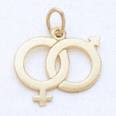
Part of the adjusting process involves knowing that a man and a woman act and react differently to situations, events, and stimuli. Why? Simply because they are made differently - a man is masculine and a woman is feminine. Although all human persons are androgynous (a normal person has both the masculine and feminine aspects), a man is predominantly masculine and a woman is predominantly feminine. This means that their physical, mental, emotional, and psychological make-ups are different. Feminine and masculine are simply worlds apart. Now, if either assumes that just because one feels, or thinks this way, then the other should feel, and think that way too then the situation is primed for disaster. It just doesn't work out that way.

Let's take this issue a bit further, and maybe digress a bit. On the physical aspect, man is stronger and woman is weaker (I'm speaking in general terms - no need to philosophize). Man has muscles; woman has curves. Now, try to understand why this is so. In the natural course of events ( as nature intended!), man is suppose to be the protector of woman. That's why man is physically stronger than woman.

Going deeper into the issue of physical differences, man has a different genital and reproductive structure than woman. Again, why? You need to go back to the good old book. Assuming you have a Bible, read Genesis, Chapter I, verse 28 where it says, "God blessed them (First man and woman) saying, 'Be fertile and multiply; fill the earth and subdue it. Have dominion etc. etc'....." Could God or the Bible be more explicit than that? That is a Divine admonition or better still, a command from God. That should put to rest the hot issue of why can't ...... forget it. That's another topic. The point is, the primary purpose of marriage is procreation (having children). This means that as husband and wife you are now co-creators with God in the act of creation. You have the power to co-create through the reproductive process each given your unique physical attributes. If people don't follow this command mankind would be extinct, or worse children that will replenish humanity will be born out of test tubes. Then, sex would be just that- sex. A word. Maybe something to act out, perhaps, enjoy at your leisure. When this happens the human person would be no more than ......... never mind.

The Stages

Okay. Now, more on the technical side. Marriage goes through a cycle that begins with courtship and goes round and round. . . . . .

First Stage - the Honeymoon Stage. As I said earlier, part of this stage is courtship, where you go on dates, outings, when only the two of you spend time together to get to know each other better. It's the time when you made plans for your future together; how many kids you're gonna have; where do you send them to school. Where you plan to set up residence, SoCal or maybe Alaska? (You didn't go into this? Come on!) It's not just the honeymoon where you go to Vegas, or Niagara Falls, or on a cruise around the Carribbean. The honeymoon stage is either long or short depending on how soon you got married after your steady days. Part of it of course is the preparation for the wedding, and the wedding ceremony itself. Then after the honeymoon proper it could extend for a period of time depending on how soon the shocking reality of married life strikes you full blast in the face.

Some experts say that the honeymoon stage is an artificial stage because much of what happens between the partners take place within the boundaries of courtship. Courtship is like.. ..... have you seen a rooster trying to make out with a hen? Courtship is basically like that. Although "marriage" is expressed in a different manner, the modality is similar. After the wooing, the female yields and the "fun" (the wedding/ marriage) takes place. Something like that. The point is, the rooster is showing off, preening, flapping it's wings, crowing -( whatever) ; the male of the specie displaying his best devil-may-care posture, as if to say "if you don't want me, there are others better", and the hen, the female, plays coy - running away, playing hard to get, trying to safeguard the treasure of the feminine. Here lies the artificiality. Behind all these "fooling around" is the basic need for intimacy.

But, I don't fully subscribe to this. While this maybe true in the earlier stages, courtship gets real the moment the partners begin to make plans and assume the posture of possession (the act of owning each other). When they fight it becomes more real. Fighting in this instance could be due to a conflict of interest ("you have no more time for me/I have no more time for myself/I feel strangled/I need some space.") While they value the relationship there still exist the need for independence, even of freedom. It could be jealousy rooted in selfishness ("you are mine alone/you belong only to me/who's that @#$%^&%$#$ smiling at you?".) Nothing could be more real than that.

Cloud 9 Isn't Forever
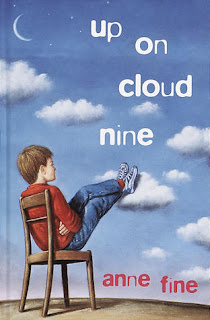
The point is, this is, theoretically, the cloud 9 stage where the partners try very hard to preserve the relationships especially when commitments have been made. Concessions are made at great pains. And, always - maybe almost always - it's the best side of the one that is being projected for the benefit of the other. Being reserved is the order of the day. Always the best foot forward, as they say. Ah, but the stage is being set for the one that follows.

Second Stage - the Disillusionment Stage.

This follows on the heels of the honeymoon stage. The scenario is like this: One morning you wake up, and you see this face on the pillow next to yours. Nostrils flare as the face breaths, snoring a little. For a moment you are disoriented. Where am I? Who is this face? What am I doing here? It was just for a moment anyway. Then you realize: "Ay, oo nga may asawa na pala ako." (Ooops! I forgot I'm already married.) Then, you look at the face again. Is this face really my asawa (spouse)? Sweetheart, the honeymoon is over. After living together for a period of time, all the artificiality of the honeymoon stage disappears under the carpet. You will now see the real person of the one you married. All those preening and coyness of courtship were acts of - let's face it - self-deception. Preening covers the imperfections of manhood, and coyness is a screen behind which somebody else lurks. Ano kaya?

Normally, the disillusionment stage is precipitated by an unpleasant event. Or, it could happen just like that. No warning. That's why you have to be prepared. How do you prepare? Why do you think I'm doing this? What could precipitate the DS? You called his office he's not there. "He's always there when I call. Where did he go?" He forgot your birthday. Oh, my gooseness! "After all these years he forgot my birthday!" You feel so unattractive because you are 3 months pregnant and your nose is so big, and you have all those pigmentation on your face and neck. "Oh, my God! It's not me. Who's this witch looking at me in the mirror? Eeeeeeeeek!!!"

Little disappointments pile up, which when taken singly don't mean a thing. Little things you overlooked before now gain significance. "I didn't know you have B.O." "And, you snore!", "Suddenly, you look so ugly!". (Why is his left foot quirky when he walks?) ( Ohh s-----t, he scattered his dirty socks again!)" As the song goes - "Little things mean a lot." Why? Because they pile up. And as they pile up you begin to notice more and more, because more and more of what is real keep popping up. After all, it's hard to maintain a facade. To be honest, you could feel really unhappy. This is where you might begin to regret your decision. "The person I married is not the person who wooed me! Oh, my God!" Am I trying to scare you? No. I'm telling you the reality of what it is. The fact is, if your relationship is strong it will survive anything. I tell you now, there is no escaping this stage. It will happen. If it does not happen, then something even worse is going on. You are ignoring each other! You pretend by mutual tacit consent that neither of you exists! You have now become escape artists. So, we move on to the next stage.

Stage Three - The Stage of Misery.
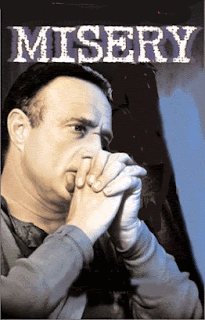
The scenario is this: you're so tired from work, you come home hungry, there's nothing to eat, and you have to cook. Then you see him sleeping on the couch. Suddenly, you exploded and something just short of the WW III erupted. Of course, he fights back. Nga-a ikaw lang ang kapoy haw? (You're not the only who's tired). He works too. Two jobs, sometimes three for the future of your family. The big question: Why did this happen? Remember Stage 2? All those things piling up? They were a disaster waiting to happen, and now it happened. At this point, you feel so miserable that a little spark could light the fuse.

Honey Works Better than Vinegar

Under ordinary circumstances you would go to him and probably tell him in a low voice, full of caring, concern, and love - "Are you tired? Are you hungry? Come on, help me cook dinner." What do you think would be his reaction, knowing full well that you are as tired as he is? He would probably give you a hug and say - "No, no, no, sweetheart, you rest now, I will do the cooking." But, we are not there yet. You still feel miserable, and you just exploded your bomb.

It is at this stage that marriages based on weak foundations fall apart. Couples split. Why? They simply could not stand the sight of one another. They fight all the time. If they don't fight, they sleep in separate rooms, talk to each other through intermediaries, they don't eat at the same table, they don't make love, and generally ignore each other. Tell me, as a sensible person, could you stand this "arrangement?" In many instances, either one or both find fulfillment elsewhere. Such fulfillment comes in many forms - a very, very expensive habit like shopping sprees, gambling, "drowning your sorrows" in alcohol or drugs, and the dreaded one of all - a lover.

But, you know what? Only immature people fall victims to Stage Three. Remember, I told you marriage is a never-ending process of adjustment? It is in stage 3 where you need most if not all of your skills in adjusting to each other. Tell me honestly now - could a person change? Dwell on that now as we proceed to the next stage.

Stage Four - The Awakening Stage.
Could a person change? What's your answer? Yes? No? Truth to tell, it is very difficult for a grown person to change completely because he or she is already set in his or her ways. But, I told you before, a normal sensible person is a mature person. Persons on the opposite side of the pole - if you look closely enough - are actually dysfunctional. Grown in years but, backward in outlook. These are the ones who change partners like they change jackets.

Change Happen Because You Willed It

On the other hand, a mature person, while he cannot change completely, works very hard at change even if it takes an entire lifetime. He backslides, yes, but he picks up where he falls and moves on. That, my dear, is what is life all about. A constant struggle to become a better person. If you go to church on Sunday, you'll understand what your priest keeps on telling you; your mission in life is to be holy. But, the priest doesn't tell you to be holy tomorrow - right away. To be holy - meaning to be a better person - you have to work every minute, every hour, every day , 24/7 to change and become that new person. Period.

The problem is, people tend to separate religion from everyday life. It's like - religion is good only on Sundays, and you concern yourself only with it when you are inside the building they call the church. Outside, you can do whatever you want, anyway you can go back to church on Sunday and try to look prim and proper again. Magpakasantos? Budlay na ya! (To be holy? That's tough man!) Right? Wrong! If the priest talks about being holy everytime you hear mass, put yourself in his shoes. He's got no choice. It's his job. He's a priest, for crying out loud. But, the simple message is - be a better person. Indi ka manglibak (don't talk trash of others), taha-on mo ang mga tigulang (respect the elderly), indi ka manghikay (don't belittle others), mag-paumod ka (be humble), don't be self-righteous (indi ka mag-mapatina-asta-ason), etc., etc. Some of the basic lessons. No hype. No religion. Just everyday issues.

If you understand what I'm saying and learn from it, you won't fall victims to Stage 3. It only happens to fools and immature persons. In Stage 4 you'll begin to realize that in order for the other person to change you have to initiate the change with yourself. You have to change yourself first. Really? Oh, yeah. You know what, sweetheart? Little changes that you make in your life are great strides toward becoming what you really are. Then, as these little changes occur in yourself you'll notice strange and beautiful things happening in your partner. As he sees you changing, he changes too. Ah, that's the beauty of Stage 4. You'll soon realize that change for the better is a mutual thing.

"There Must Be Something Wrong With Me....."

It's seems paradoxical, but consider this: If you see someone changing for the worst examine yourself first, then ask the question -"have I been a better person when I'm around this man or woman?" You'd be surprised at how often the behavior of the other person is simply a reaction to how you have behaved. It's hard. Yep! Set ways remember? Yet, this is the struggle to be holy. Act good and you'll be surprised at how even the most ugly person would react favorably to you.

In this stage, you begin to see the light. It's like waking up to a bright new day, and sets the stage for the most important phase of all.

Stage Five - The Stage of Maturity. It is sad to note that so many married couples never reach this stage. I hope and pray that you do. Be like Ronald and Nancy Reagan . Oh my! What a beautiful relationship up to the end. Don't be like Charlie Sheen and Denise Richards, or Tom Cruise and Nicole Kidman. Pity.

The reality is, most of the time, couples get snagged in the interphase between stage 3 and stage 4. They survive by finding a surrogate to splint their dysfunctional relationship. Money for instance is a strong surrogate. Money can buy happiness, at least for a while. Or, they can mutually indulge a habit like gambling to take their minds off each other. Or, work! Strange, but work can be a sugar-coated poison pill of a surrogate. It can become a "valid excuse" to escape from the house. And, consequently escape from that other person "who gets on my nerves." You ever wonder why so many married people do drugs? Marriage has become a burden to them.

Anyway, at this stage given that you survived stage 3 and opened your eyes in stage 4, you will have grown emotionally. You will have a higher marital EQ, so to speak. Stage 5 is really a beautiful stage. It's like getting a second wind in marriage. It's realizing that - "I really love this person despite his imperfections. I know that it is difficult to make adjustments, and it is not easy to change. But, I will try very hard to be a better person. By so doing my mate will reciprocate my efforts knowing he is a sensible mature person. Together we can have a beautiful relationship which our children will be proud to copy and learn from. Sa totoo lang, alang-alang mo man na siya i-uli kay nanay ya kag tatay ya (Truth is, you cannot return/ exchange your mate like merchandize) . Stage 5 is actually like being in honeymoon again. The feeling of being able to accept a person for what he is and of being accepted for what you are cannot be expressed tangibly. It's something that's too much even for words to describe or define. "Palangga ta gid ka, kay... kay ..... kay .....ambot..... basta lang" (I really do love you and it would take forever to tell you how........ I don't even know where to start.)

It's Not the End Yet . . . . . . . . . . . . . . . . . . . . . . . .

So, when you've reached stage 5 do you stay there and live happily ever after? Nope. Not on your life. Do you know that the human person is like the lotus flower that is in constant state of unfolding? You see, the lotus flower never stops to unfold until it withers. A human person is like that; never stops growing until he or she dies. I'm not talking about aging. That's different. Unfolding in Ilonggo means "nagapamukadkad (blooming)." So, a person keeps on blooming until death. Now, if the person is constantly unfolding what happens? It's this: new aspects of the personality never before seen in a particular man or woman come out into the open. So you think you knew him well, hah? You'll be surprised. That's why I told you before, in the course of your marriage you will one day ask yourself -"Daw indi man ni amo ang gin-nobyo ko?" (Is this the same guy I fell for?) He's the same guy. The only thing is, you are seeing more and more of him with each passing day. Ti ikaw ya? Amo man, eh! (The same thing happens in your case -for him).

What happens next is that you may not like some aspects of your discovery . And, if you haven't learned anything about adjusting and compromising you'll end up fighting and squabbling. "Daw indi ka man amo na sang una?!! Nga-a subong nag-lain ka na haw?" (Why did you change now?) That's difficult to answer, because even the person concerned doesn't have answers. (Your Mommy N has a good reply though: "Ti mo!") So, you go through the cycle again. Back to dillusionment, to misery to etc., etc., etc. If your relationship is strong you'll survive cycle, after cycle, after cycle. Those who don't will say later - "I never really knew him or her." Ay, hangag. (Foolish, of course). If the person concerned cannot even claim to know himself/herself fully, ikaw pa? Napoleon Bonaparte once said -"The greatest conquest is the conquest of the Self." And, you can only conquer your Self if you have full knowledge of it.

Next we'll talk about "How to Fight Productively."